


“I checked out a few bits and it sounded awesome. They say it's electronic but it's more like kind of instrumental Godspeed You! Black Emperor, really soundtracking moody. I thought it was pretty abstract and sort of moody, but I like stuff like that.”Watch this moment

Ravedeath, 1972
Tim Hecker
In "Ravedeath, 1972," Tim Hecker crafts an immersive soundscape that juxtaposes digital and organic textures, creating a profound listening experience. The album opens with the track "The Piano Drop," where distant, haunting piano chords are layered with a rich tapestry of noise, evoking a sense of desolation and introspection. The production choices reflect Hecker's meticulous attention to detail, as he blends field recordings, synthesizers, and granular processing to create an otherworldly atmosphere. Throughout the album, the tempo remains deliberately slow, allowing listeners to fully absorb the intricacies of each sonic layer. The use of reverb and delay creates a cavernous space, making it feel as if the sound is echoing through time. Notably, tracks like "Stab Variation" highlight Hecker's ability to transform simple motifs into complex emotional narratives, with piercing tones that oscillate in and out of focus. Released in 2011 under the kranky label, "Ravedeath, 1972" stands out in the electronic genre for its blend of ambient drone and experimental sound art. It resonates with the historical context of a post-digital age, where technology often informs our perception of reality. Hecker draws from this tension, reflecting on themes of decay and memory, making the album both a personal and collective exploration of sound. Each track invites deep contemplation, establishing a connection between the listener and the ephemeral nature of existence.
Picked by
“Ravedeath, 1972 by Tim Hecker. Our Canadian party boy. Mean Canadian electronic music, I guess. I love Tim Hecker. I like when someone has a style that applies itself to different moods.”Watch this moment
Tracklist
12 tracks · 52:23 · click to preview1
The Piano Drop
2:53
2
In the Fog I
4:52
3
In the Fog II
6:01
4
In the Fog III
5:00
5
No Drums
3:24
6
Hatred of Music I
6:11
7
Hatred of Music II
4:22
8
Analog Paralysis, 1978
3:51
9
Studio Suicide, 1980
3:24
10
In the Air I
4:11
11
In the Air II
4:07
12
In the Air III
4:01













Richard D. James Album
Aphex Twin
1996
Selected Ambient Works 85-92
Aphex Twin
1992

Dummy
Portishead
1994

Promises (feat. London Symphony Orchestra)
Floating Points, Pharoah Sanders, London Symphony Orchestra & Sam Shepherd
2021


99.9%
KAYTRANADA
2016
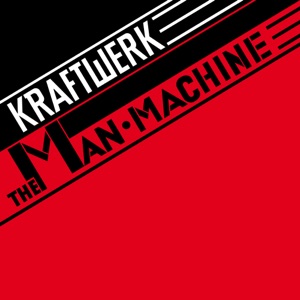
The Man-Machine
Kraftwerk
1978

Neu! 75
Neu!
1975

Portishead
Portishead
1997

Silent Shout
The Knife
2006


Moon Safari
Air
1998

Selected Ambient Works, Vol. II
Aphex Twin
1994

Cheetah - EP
Aphex Twin
2016
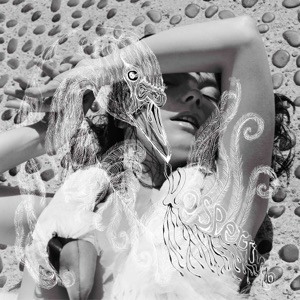
Vespertine
Björk
2001

Homogenic
Björk
1997

Before and After Science - Ten Pictures
Brian Eno
1977

Limb by Limb / The Return - Single
Cutty Ranks
1995
Continue in the archive
Keep digging.
Ravedeath, 1972 is one of 6,374 records logged here. Walk the canon, find a curator, or stumble into something new.


–
Ravedeath, 1972 · Tim Hecker
0:00
0:30
Apple Music · 30s preview